
Food Safety & Commercial Kitchen Equipment
-
How Remote Temperature Monitoring Systems Keep Food Safe Overnight
What Are Remote Temperature Monitoring Systems and How Do They Work?
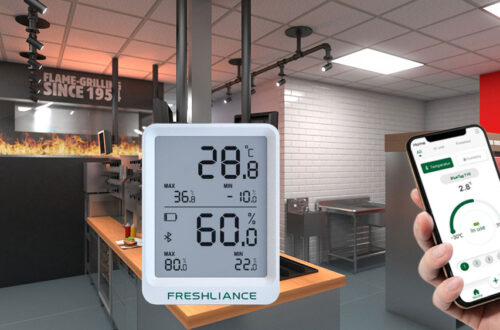
Remote temperature monitoring systems are automated solutions that track food storage temperatures continuously without requiring manual intervention. These systems consist of three essential components: wireless sensors, connectivity infrastructure, and cloud-based software that processes and stores temperature data.
1. Wireless Sensors
Wireless sensors form a crucial component of remote temperature monitoring systems, providing accurate and continuous tracking of ambient conditions inside refrigerators, freezers, and cold storage units. These compact devices record temperature data at regular intervals—typically every few minutes—and transmit readings via Wi-Fi, cellular networks, or other wireless protocols.
By functioning as part of remote temperature monitoring systems, these sensors operate independently of staff presence, making them ideal for overnight or unattended monitoring. This automation ensures consistent data collection and immediate alerts in case of temperature fluctuations, helping businesses maintain compliance and protect sensitive products.
2. Secure Cloud Platform
The collected data travels to a secure cloud platform where it’s stored, analysed, and made accessible through web dashboards or mobile applications. Food safety managers can view real-time temperature readings from any location, receive instant alerts when temperatures drift outside safe ranges, and access historical data for compliance reporting.
3. Uninterrupted Surveillance Network
This architecture enables how remote temperature monitoring systems keep food safe overnight by creating an uninterrupted surveillance network. When a freezer malfunctions at 2 AM, the system immediately notifies designated personnel via text, email, or phone call—allowing corrective action before food spoils. The automation eliminates gaps in temperature oversight that occur between manual checks, providing comprehensive protection for perishable inventory around the clock.
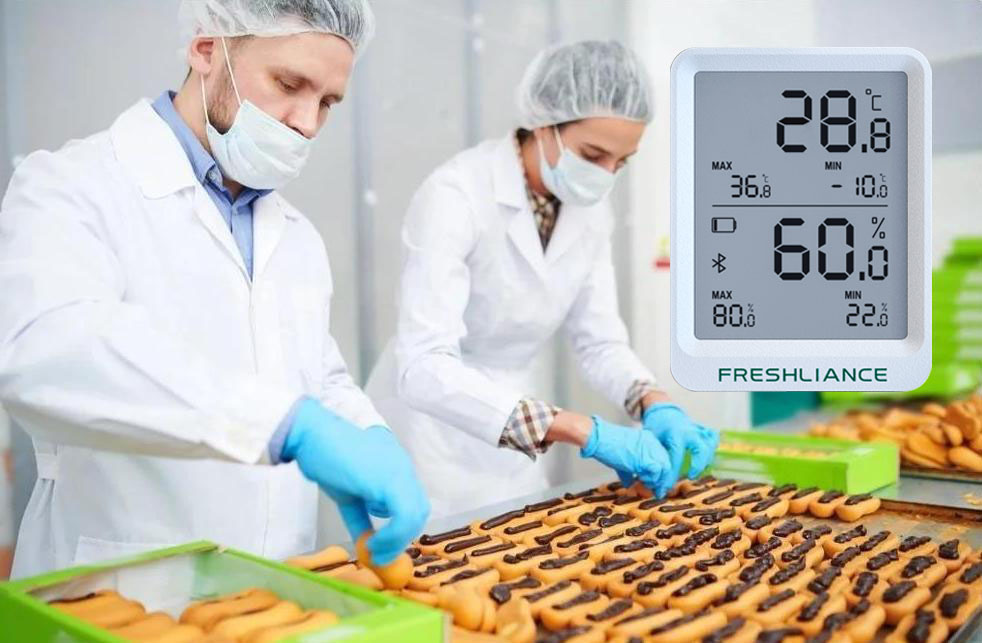
Why Is Continuous Temperature Monitoring Crucial for Food Safety Overnight?
Continuous temperature monitoring prevents dangerous bacterial growth that accelerates when refrigeration units fail during unattended overnight hours. Without staff present to notice equipment malfunctions, temperatures can drift into the danger zone (5°C to 60°C) where pathogens multiply rapidly, compromising entire inventories before morning checks reveal the problem.
Understanding the Risks of Overnight Storage
Temperature fluctuations pose severe risks during overnight storage when mechanical failures, power interruptions, or door seal issues go undetected for 8-12 hours. A refrigerator warming from 2°C to 8°C overnight creates ideal conditions for bacteria like Salmonella, E. coli, and Listeria to proliferate exponentially. Food spoilage prevention requires immediate detection of these deviations, not discovery hours later when contamination has already occurred.
The Limitations of Traditional Monitoring Methods
The absence of staff creates a critical vulnerability in traditional monitoring approaches. Manual checks performed at closing time cannot detect problems that develop at 2 AM, leaving perishable items exposed to unsafe conditions for extended periods. Bacterial growth control demands constant vigilance that human schedules cannot provide.
The Solution: Continuous Temperature Monitoring
24/7 oversight through automated systems fills this gap by tracking every minute of overnight storage. Real-time alerts notify designated personnel the moment temperatures exceed safe thresholds, enabling remote corrective action or emergency response before products reach unsafe conditions. This uninterrupted surveillance transforms overnight storage from a vulnerable period into a fully monitored operation.
More about: Top 5 Food Temperature Monitoring Devices for Commercial Kitchens
How Do Remote Systems Improve Compliance with Food Safety Regulations?
Remote temperature monitoring systems automatically generate the precise documentation required by HACCP compliance, ISO standards, and HARPC requirements. Food safety regulations mandate continuous temperature records with timestamps and accurate readings—a standard that manual logging struggles to meet consistently. Automated temperature logs eliminate gaps in documentation that could trigger violations during health inspections.
The systems create audit-ready reports instantly, removing the burden of compiling paper records or spreadsheets when inspectors arrive. Digital records are tamper-proof, timestamped, and stored securely in the cloud, providing verifiable proof of compliance that satisfies regulatory bodies. This immediate access to comprehensive data demonstrates due diligence and professional food safety management.
Key compliance benefits include:
- Automatic generation of required temperature documentation
- Permanent digital records accessible for multi-year audits
- Elimination of handwritten log errors or missing entries
- Real-time proof of corrective actions taken during temperature deviations
Non-compliance carries severe consequences—health department citations, temporary closures, costly fines, and potential lawsuits from foodborne illness outbreaks. Remote monitoring systems act as insurance against these risks by maintaining unbroken chains of temperature custody. When equipment malfunctions overnight, the system documents both the problem and the response time, protecting businesses from liability claims. This level of accountability transforms regulatory compliance from a reactive burden into a proactive safeguard.
How Are Remote Systems Better Than Traditional Manual Checks?
The Limitations of Manual Temperature Checks
Manual temperature checks typically occur twice daily, leaving dangerous gaps of 10-12 hours where temperature fluctuations go undetected. This infrequent monitoring creates blind spots during overnight hours when equipment malfunctions or door seal failures can compromise entire inventories before staff discover the problem.
When considering human factors, the limitations of manual temperature checks become clear:
- Staff members rushing through morning routines may forget to log readings, record incorrect values, or skip checks entirely during busy periods.
- Handwritten logs are susceptible to illegible entries, lost paperwork, and intentional falsification when employees backfill missing data.
The Benefits of Remote Monitoring
Real-time alerts transform food safety management by notifying designated personnel the moment temperatures drift outside safe ranges. A refrigerator failing at 2 AM triggers immediate notifications via text, email, or phone call, allowing managers to respond within minutes rather than discovering spoiled stock at 8 AM. This rapid response prevents thousands of pounds in food waste.
Error reduction through automation eliminates the reliability issues inherent in manual processes. Sensors capture precise readings every few minutes without fatigue, distraction, or memory lapses. Digital timestamps and automated logging create tamper-proof records that satisfy auditors whilst freeing staff to focus on food preparation rather than paperwork.
Moreover, the transition to remote monitoring systems offers significant cost savings, further justifying the shift. The time savings alone justify the transition—staff reclaim 15-30 minutes daily previously spent walking between units with clipboards and thermometers.
How Do These Systems Enhance Operational Efficiency and Reduce Waste?
Remote monitoring systems dramatically boost operational efficiency in food storage by eliminating repetitive manual tasks. Staff no longer spend hours walking between storage units with clipboards, freeing them to focus on food preparation, customer service, and other value-adding activities. Automated reporting generates compliance documentation instantly, removing the administrative burden of transcribing handwritten logs into digital formats.
The technology excels at reducing food waste through early warning capabilities. When sensors detect temperatures creeping toward unsafe levels—even by a single degree—immediate alerts trigger corrective action before spoilage occurs. A restaurant that might have lost an entire night’s worth of refrigerated inventory due to a malfunctioning compressor can now address the issue within minutes of detection, saving thousands in product costs.
Transforming Resource Management with Precise Data Collection
Precise data collection transforms resource management. Historical temperature patterns reveal:
- Peak refrigeration load times requiring attention
- Underperforming equipment consuming excess energy
- Optimal door-opening schedules to maintain stable conditions
- Accurate spoilage timelines for inventory rotation
This granular insight allows food service operators to make data-driven decisions about purchasing quantities, storage allocation, and equipment maintenance schedules. The result is leaner operations with minimal waste, where every decision is supported by concrete temperature data rather than guesswork or outdated manual records.
Can Remote Monitoring Systems Improve Customer Experience and Brand Reputation?
Remote monitoring systems directly enhance customer satisfaction by guaranteeing food quality maintenance through precise temperature control. When storage conditions remain optimal overnight, ingredients and prepared meals retain their freshness, texture, and flavour, ensuring customers receive consistently high-quality food every time they visit.
Trust builds naturally when food service operators demonstrate commitment to safety standards. Customers increasingly value transparency about food handling practices. Documented temperature compliance provides tangible proof of diligence, which is crucial given the review of food safety violations in urban school foodservice. This visible dedication to safety protocols strengthens brand reputation that food service establishments work hard to cultivate.
The connection between reliable food safety practices and customer loyalty runs deep:
- Repeat business increases when customers experience consistently safe, fresh food
- Positive reviews and word-of-mouth recommendations grow as quality remains dependable
- Competitive advantage emerges in markets where food safety incidents damage rival brands
Restaurants, cafeterias, and food service franchises using remote monitoring systems protect themselves from the reputational damage caused by foodborne illness outbreaks. A single incident can devastate years of brand-building efforts. According to a study published in the PMC, consistent safety records become powerful marketing assets. These digital temperature logs also provide immediate evidence during customer complaints or health inspections, demonstrating proactive responsibility rather than reactive damage control.
Moreover, the implementation of comprehensive food sanitation rules can further bolster the effectiveness of these remote monitoring systems. By adhering to such guidelines while utilizing advanced technology, food service operators can ensure a higher standard of safety and quality.
What Environmental Benefits Do Remote Temperature Monitoring Systems Offer?
Remote temperature monitoring systems significantly reduce energy consumption by identifying inefficiencies in refrigeration equipment before they escalate. When sensors detect temperature inconsistencies or equipment struggling to maintain set points, facility managers can address issues immediately—preventing units from overworking and consuming excess electricity. This optimisation extends equipment lifespan whilst lowering utility bills.
Paperless temperature tracking eliminates thousands of manual log sheets annually across food service operations. Traditional paper-based systems require staff to record readings multiple times daily, generating substantial waste that ends up in landfills. Digital records stored securely in the cloud provide the same compliance documentation without environmental impact, supporting sustainability in food safety initiatives.
The environmental advantages extend beyond direct resource savings:
- Reduced food waste through early detection prevents spoiled products from reaching disposal sites, decreasing methane emissions from decomposing organic matter
- Optimised refrigeration cycles mean compressors run only when necessary, cutting carbon footprint
- Extended equipment life reduces manufacturing demand for replacement units and associated production emissions
Food service operations implementing these systems demonstrate commitment to eco-friendly practices whilst maintaining rigorous safety standards. How remote temperature monitoring systems keep food safe overnight becomes intertwined with environmental responsibility—protecting both public health and planetary resources through intelligent automation that works continuously without generating physical waste or unnecessary energy expenditure.
How Is the Implementation Process Designed to Fit Existing Food Storage Operations?
Easy installation remote monitoring transforms how food businesses upgrade their temperature tracking without operational headaches. Most systems feature plug-and-play sensors that require no complex wiring or technical expertise—staff simply place wireless devices inside refrigerators and freezers, connect them to the network, and begin monitoring within minutes.
The setup process causes minimal disruption to daily operations. Unlike traditional monitoring upgrades that might require shutting down equipment or extensive reconfiguration, modern remote systems operate independently of existing infrastructure. Sensors communicate wirelessly with cloud platforms, eliminating the need for drilling holes, running cables, or modifying storage units.
Integration with existing systems proves remarkably flexible across diverse food service environments:
- School cafeterias can monitor multiple walk-in coolers and prep areas simultaneously
- Restaurant chains deploy standardised solutions across all franchise locations
- Hospital kitchens integrate sensors with their existing food safety protocols
- Catering operations adapt the technology to both permanent and temporary storage facilities
The wireless nature of these devices means businesses can start with a single unit to test effectiveness, then scale up gradually. This phased approach allows operations to maintain their regular workflow whilst building confidence in the new system. Sensors typically mount magnetically or via adhesive strips, making relocation simple if storage layouts change.
What Additional Advantages Does Data Analytics Provide for Food Storage Maintenance?
Data analytics transforms temperature monitoring from reactive to proactive by identifying patterns that signal potential equipment problems before failures occur. The system continuously collects temperature data, tracking subtle variations that indicate declining refrigeration performance—such as longer cooling cycles, inconsistent temperature holds, or gradual temperature drift. This predictive maintenance food equipment approach allows managers to schedule repairs during convenient times rather than facing emergency breakdowns during peak service hours.
Moreover, the implementation of industrial data analytics reveals equipment behaviour patterns that manual checks simply cannot detect. A freezer might maintain safe temperatures but show increasing fluctuations over weeks, suggesting a failing compressor or refrigerant leak. Catching these early warning signs prevents catastrophic failures that could compromise entire inventories overnight.
Data-driven decision making extends beyond immediate repairs to strategic planning:
- Optimising maintenance schedules based on actual equipment performance rather than arbitrary timelines
- Identifying which units require replacement versus repair based on efficiency trends
- Allocating maintenance budgets more effectively by prioritising equipment showing decline
- Reducing emergency service calls that cost significantly more than planned maintenance
The analytics dashboard presents complex data in accessible formats, enabling food service managers without technical expertise to make informed maintenance decisions. This intelligence protects food safety whilst controlling operational costs through smarter equipment management strategies.

Conclusion
The benefits of remote temperature monitoring systems for overnight food safety solutions go far beyond just meeting regulations. These systems protect your business from expensive spoilage, fines, and damage to your reputation while your staff are not on-site.
How Remote Temperature Monitoring Systems Keep Food Safe Overnight can be explained by three key advantages:
- Continuous protection through 24/7 automated monitoring
- Immediate response with real-time alerts when temperatures fluctuate
- Complete documentation that meets regulatory requirements
Food service operators who still depend on manual checks twice a day are putting their operations at risk during the critical overnight hours. Remote monitoring technology has become affordable, easy to install, and proven to reduce waste while improving food safety standards.
The question isn’t whether your operation needs this technology—it’s how quickly you can put it into action. Start with a pilot programme in your highest-risk storage areas, then expand as you see measurable improvements in safety, efficiency, and cost savings. Your food safety management deserves the same level of sophistication as other parts of your business.
Learn about: Top 5 Food Temperature Monitoring Devices for Commercial Kitchens
FAQs
1. What are remote temperature monitoring systems and how do they work?These systems use wireless sensors and cloud-based software to continuously track storage temperatures, sending real-time data and alerts to food safety managers without requiring manual checks.
2. Why is continuous temperature monitoring important, especially overnight?Overnight, when staff are absent, refrigeration malfunctions or door seal issues can allow temperatures to enter the “danger zone” (5°C–60°C), promoting bacterial growth. Continuous monitoring prevents spoilage and ensures food safety.
3. How do remote monitoring systems improve compliance with food safety regulations?They automatically generate timestamped, tamper-proof digital logs that meet HACCP, ISO, and HARPC standards, providing audit-ready reports without manual record-keeping.
4. What are the main components of a remote temperature monitoring system?The system consists of wireless sensors, connectivity infrastructure (Wi-Fi or cellular), and a secure cloud platform for data storage, analysis, and alerts.
5. How do remote systems compare to traditional manual temperature checks?Unlike manual checks, which leave gaps and are prone to errors, remote systems provide continuous monitoring, real-time alerts, precise automated logs, and reduce the risk of missed temperature deviations.
6. Can remote monitoring systems help reduce food waste and operational costs?Yes. Early alerts prevent spoilage, automated reporting saves staff time, and precise data allows better inventory and equipment management, reducing unnecessary product loss and labor costs.
7. How do these systems enhance customer experience and protect brand reputation?By maintaining consistent food quality and safety, they ensure customers receive fresh, safe products, building trust, repeat business, and positive reviews.
8. What environmental benefits do remote temperature monitoring systems offer?They reduce energy consumption by optimising refrigeration efficiency, decrease food waste, and eliminate paper logs, contributing to sustainability efforts.
9. Is installation of remote monitoring systems disruptive to existing operations?No. Most systems are wireless and plug-and-play, requiring minimal setup, no complex wiring, and can be scaled gradually without interrupting daily operations.
10. How does data analytics from remote systems improve equipment maintenance?Analytics track temperature trends to detect early equipment malfunctions, enabling predictive maintenance, reducing emergency repairs, extending equipment life, and optimising operational costs.
You May Also Like
Top 5 Food Temperature Monitoring Devices for Commercial Kitchens
-
Top 5 Food Temperature Monitoring Devices for Commercial Kitchens
What Are Food Temperature Monitoring Devices and Why Are They Essential in Commercial Kitchens?
Food temperature monitoring devices are precise tools used to measure and keep track of the internal temperatures of food items during cooking, storage, and holding processes. These instruments play a crucial role in preventing foodborne illnesses in professional food service settings.
Preventing Foodborne Illnesses Through Temperature Control
Bacteria can multiply rapidly within the “danger zone” temperature range of 5°C to 60°C. Implementing food temperature monitoring practices helps food service establishments eliminate guesswork and maintain strict safety standards. Through accurate food temperature monitoring devices, businesses can verify that food has reached safe internal temperatures during cooking and remains properly chilled during storage.
This level of precision in food temperature monitoring is essential for preventing the growth of harmful bacteria such as Salmonella, E. coli, and Listeria — pathogens responsible for thousands of cases of foodborne illness each year. By maintaining consistent temperature control, food businesses can protect consumers’ health and ensure compliance with food safety regulations.
Meeting Regulatory Requirements
Health inspectors require documented evidence that proper temperature management practices are being followed. Modern food temperature monitoring devices have the capability to generate automatic logs and alerts, which serve as proof of compliance with various regulations, including:
- Food Standards Agency (FSA) guidelines
- HACCP (Hazard Analysis Critical Control Points) protocols
- Local environmental health regulations
Commercial kitchens that do not have reliable systems in place for monitoring temperatures may face enforcement actions such as fines, temporary closures, or even revocation of their operating licences. It is essential for these establishments to invest in high-quality commercial kitchen equipment specifically designed for temperature monitoring. By doing so, they can protect both public health and their business operations, making these devices necessary investments rather than optional add-ons.
How Does Proper Temperature Control Impact Food Safety in Commercial Kitchens?
Temperature control is the main way to stop bacteria from growing and causing foodborne illness. The “danger zone” between 5°C and 60°C is where harmful bacteria like Salmonella, E. coli, and Listeria can multiply quickly, possibly doubling every 20 minutes.
Critical Temperature Ranges for Food Safety
Commercial kitchens must keep strict temperature limits for all types of food:
- Hot foods: Must stay at 60°C or higher during holding and serving
- Cold foods: Need to be stored at 4°C or lower to stop bacteria from growing
- Frozen items: Should be kept at -18°C to maintain quality and safety
Consequences of Temperature Mismanagement
When commercial kitchen hygiene rules fail regarding temperature control, the outcomes can be serious. Bacterial contamination can lead to food poisoning outbreaks, potentially affecting many customers at once. The financial consequences go beyond immediate medical expenses—restaurants face legal responsibility, regulatory fines, temporary closures, and long-lasting damage to their reputation that drives customers away.
The Human Factor in Temperature Safety
Equipment alone cannot ensure foodborne illness prevention. Staff must understand why temperatures are important, not just what temperatures to keep. Proper training makes sure employees check temperatures at the right times, place thermometer probes correctly in the thickest part of food, and take appropriate action when readings go outside safe ranges. Regular competency checks confirm that team members remember these crucial skills.
More about: How Remote Temperature Monitoring Systems Keep Food Safe Overnight
What Features Should Be Considered When Choosing Food Temperature Monitoring Devices for Commercial Use?
Accuracy stands as the most critical device feature for commercial kitchens. A monitoring device must provide readings within ±1°F to ensure food stays within safe temperature zones. Look for equipment with calibration capabilities that allow regular adjustments to maintain precision throughout the device’s lifespan.
Durability determines whether a device can withstand the demanding conditions of commercial food preparation. Professional-grade thermometers need moisture resistance to handle steam, splashes, and frequent cleaning. Devices with IP ratings (Ingress Protection) indicate their ability to resist water and dust penetration. Probe cables should tolerate high temperatures—ideally up to 572°F for continuous use, with short-term resistance to 700°F for extreme cooking scenarios.
Alarms provide essential safeguards against temperature drift. High and low temperature alerts notify staff immediately when food enters the danger zone between 40°F and 140°F. Programmable alarms allow customisation for different food types and storage requirements. Audible alerts must be loud enough to hear in busy kitchen environments, typically 85 decibels or higher.
Additional considerations include:
- Display readability in various lighting conditions
- Response time for quick temperature readings
- Battery life to prevent unexpected failures during service
- Probe length suitable for large cuts of meat or deep containers
Which Are the Top 5 Food Temperature Monitoring Devices Recommended for Commercial Kitchens?
The best top food thermometers for commercial operations combine precision, durability, and ease of use to meet demanding kitchen environments. These five devices represent the industry’s most reliable options for maintaining food safety standards.
1. ChefAlarm by ThermoWorks
This professional oven thermometer stands out with its large, backlit display that shows continuous minimum and maximum temperature readings simultaneously. The Pro-Series probes withstand temperatures up to 572°F, with cable insulation rated for short-term exposure up to 700°F. Its splashproof design protects against kitchen moisture, whilst programmable high and low alarms alert staff immediately when temperatures drift outside safe zones. The adjustable timer adds versatility for multi-task monitoring.
2. Cooper-Atkins DFP450W Digital Pocket Thermometer
Built for speed and accuracy, this device delivers readings in three seconds with a temperature range of -40°F to 450°F. The antimicrobial casing resists bacterial growth, and the auto-off feature preserves battery life during busy service periods. Its slim profile fits easily into chef coat pockets.
3. ThermoWorks Thermapen ONE
Reading temperatures in one second, this instant-read thermometer features an intelligent backlight that adjusts to ambient conditions. The 360-degree rotating display ensures readability from any angle, whilst the IP67 waterproof rating allows for complete submersion during cleaning.
4. Comark WiFi Temperature Monitoring System
This wireless system monitors multiple points simultaneously, sending real-time alerts to smartphones when temperatures deviate. Cloud-based data logging provides automatic HACCP compliance documentation, eliminating manual record-keeping.
5. Taylor Precision Products 9842FDA Waterproof Digital Thermometer
NSF-certified and FDA-compliant, this thermometer offers a temperature range of -40°F to 450°F with ±1°F accuracy. The hold function freezes readings for recording, whilst the shatterproof lens protects the display in high-traffic environments.
How Can Staff Training Enhance the Effectiveness of Food Temperature Monitoring in Commercial Kitchens?
Staff training transforms temperature monitoring devices from simple tools into powerful food safety assets. Even the most advanced thermometer delivers inaccurate readings when used incorrectly—inserting the probe into the wrong part of food, failing to wait for stable readings, or measuring surface temperature instead of internal temperature compromises safety protocols.
Proper thermometer usage requires specific techniques that staff must master through hands-on training:
- Probe placement: Insert thermometers into the thickest part of food, avoiding bones, fat, or gristle that skew readings
- Reading stability: Wait for temperature displays to stabilise before recording measurements, typically 10-15 seconds for digital devices
- Multiple checks: Test several locations in large batches or thick cuts to ensure uniform temperature throughout
- Probe depth: Insert probes at least 2 inches into solid foods for accurate core temperature readings
Regular calibration practices maintain device accuracy and prevent false confidence in faulty readings. Staff should perform ice-point calibration monthly by submerging probes in ice water (should read 32°F/0°C) or boiling-point calibration using boiling water (should read 212°F/100°C at sea level). Documentation of calibration dates and results creates accountability whilst identifying devices requiring professional recalibration or replacement.
Training sessions should include practical demonstrations, competency assessments, and refresher courses quarterly to reinforce correct procedures and address common mistakes that compromise food safety standards.
What Additional Food Safety Practices Complement Temperature Monitoring in Commercial Kitchens?
Temperature monitoring works best when paired with robust cross-contamination prevention and strict hygiene protocols. A colour-coded cutting board system creates an immediate visual barrier between raw meats and ready-to-eat foods, reducing the risk of bacterial transfer that temperature control alone cannot address.
Effective cross-contamination prevention includes:
- Red boards exclusively for raw meat
- Yellow boards for cooked proteins
- Green boards for fresh produce and salads
- Blue boards for raw fish and seafood
- White boards for dairy products and bread
Sanitisation routines after handling raw ingredients serve as the second line of defence. Commercial kitchens should implement a three-step cleaning process: scraping away food debris, washing with hot soapy water, and applying an approved sanitiser solution. All contact surfaces, utensils, and equipment require thorough sanitisation between tasks involving different food types.
Proper refrigerator organisation prevents physical contamination when temperature systems fail to catch positioning errors. Raw meats belong on bottom shelves where drips cannot reach prepared foods above. Staff must understand that even perfectly chilled food becomes unsafe when cross-contamination occurs through improper storage or handling practices.
In addition to these practices, adhering to the top 10 tips for a food-safe kitchen can further enhance food safety in commercial kitchens.
Why Is Investing in Quality Food Temperature Monitoring Equipment Beneficial for Commercial Kitchens?
Quality temperature monitoring equipment protects commercial kitchens from devastating financial losses and legal complications. A single foodborne illness outbreak can cost establishments thousands in compensation claims, legal fees, and temporary closures. Reliable devices from the Top 5 Food Temperature Monitoring Devices for Commercial Kitchens provide documented proof of food safety compliance, creating a defensible record during health inspections and potential litigation.
Investment benefits extend beyond risk mitigation:
- Financial protection: Preventing even one outbreak saves substantially more than the cost of premium monitoring equipment
- Reduced food waste: Accurate temperature tracking prevents unnecessary disposal of products due to uncertainty about storage conditions
- Operational efficiency: Automated alerts allow staff to focus on service rather than constant manual checks
- Insurance advantages: Documented safety protocols may qualify kitchens for reduced liability insurance premiums
Customer trust represents perhaps the most valuable return on investment. Establishments demonstrating rigorous temperature monitoring build reputations for safety and quality that translate directly into repeat business and positive reviews. In an era where social media amplifies food safety incidents instantly, the cost of quality monitoring devices pales against the potential damage to brand reputation.
Ready to protect your kitchen and customers? Explore professional-grade temperature monitoring solutions that deliver accuracy, durability, and peace of mind. Your investment in proper equipment today safeguards your business’s future and reinforces your commitment to exceptional food safety standards.
Learn about: How Remote Temperature Monitoring Systems Keep Food Safe Overnight
FAQs
1. What are food temperature monitoring devices and why are they important in commercial kitchens?These devices accurately measure the internal temperatures of food during cooking, storage, and holding, preventing foodborne illnesses and ensuring compliance with safety regulations.
2. How do temperature monitoring devices prevent foodborne illnesses?By keeping food out of the “danger zone” (5°C–60°C), these devices stop harmful bacteria like Salmonella, E. coli, and Listeria from multiplying, reducing the risk of contamination.
3. What are the critical temperature ranges for safe food storage and cooking?Hot foods: ≥60°C
Cold foods: ≤4°C
Frozen items: -18°C or lower
Maintaining these ranges prevents bacterial growth and ensures food safety.4. What features should commercial kitchens look for when choosing temperature monitoring devices?Key features include high accuracy (±1°F), durability and moisture resistance, IP ratings, fast response time, programmable alarms, and suitable probe lengths for different foods.
5. Which are the top recommended food temperature monitoring devices for commercial kitchens?Some top devices include:
ChefAlarm by ThermoWorks
Cooper-Atkins DFP450W Digital Pocket Thermometer
ThermoWorks Thermapen ONE
Comark WiFi Temperature Monitoring System
Taylor Precision Products 9842FDA Waterproof Digital Thermometer6. How does staff training improve the effectiveness of temperature monitoring devices?Proper training ensures correct probe placement, stable reading times, multiple checks for large batches, and regular calibration, turning devices into reliable tools for food safety compliance.
7. How do temperature monitoring devices help with regulatory compliance?Modern devices generate automatic logs and alerts, serving as documented proof for HACCP protocols, FSA guidelines, and local health inspections.
8. Can temperature monitoring devices reduce food waste and operational costs?Yes. Accurate monitoring prevents unnecessary disposal due to uncertainty about storage conditions, optimises inventory management, and frees staff from constant manual checks.
9. What complementary food safety practices enhance the effectiveness of temperature monitoring?Cross-contamination prevention using colour-coded cutting boards, strict sanitisation routines, proper refrigerator organisation, and adherence to hygiene protocols work alongside temperature monitoring to ensure food safety.
10. Why is investing in high-quality temperature monitoring devices worthwhile for commercial kitchens?Reliable devices protect against foodborne illness, legal liability, financial losses, and reputational damage, while improving operational efficiency, food quality, and customer trust.
You May Also Like
How Remote Temperature Monitoring Systems Keep Food Safe Overnight

